Hideout and the Quiet Annexation that Changed Everything
Most people driving through Richardson Flat today see open space. They see the familiar park-and-ride lot and the trails winding into the hills.
What they don't see is the legal earthquake that already happened here, one that quietly set the stage for a completely new town. In 2020, the small town of Hideout, which sits in Wasatch County, executed a controversial annexation.
It pulled 350 acres of this land right out from under Summit County's jurisdiction. The move was immediate and contentious, sparking years of lawsuits because it fundamentally altered the map and the future of the area.
That annexed land is the entire foundation for what's coming next. At the very same meeting where they took control, the Hideout Town Council approved a development agreement for the property.
The litigation has played out, and the plans are settled. Now, the quiet annexation is about to get very loud, as shovels prepare to turn that open space into a place called Silver Meadows.
Silver Meadows: A New Town Rises, But For Whom?
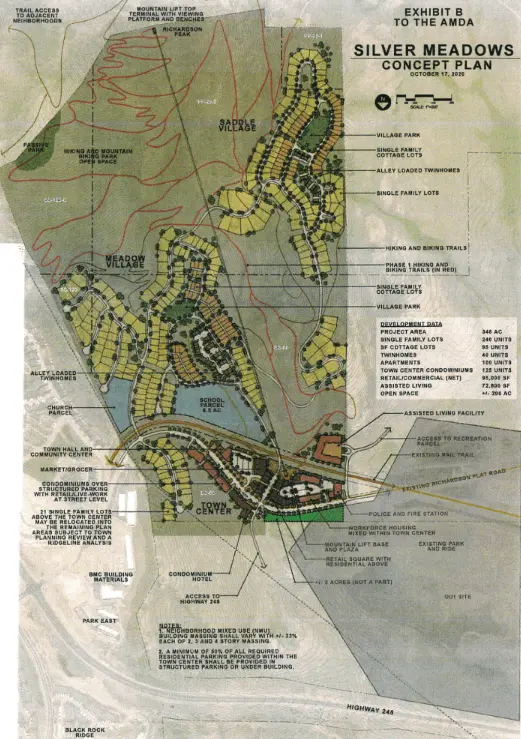
With the legal stage set, the blueprint for Richardson Flat is now clear. It's called Silver Meadows, and the approved plans are substantial.
They outline up to 600 housing units, a grocery store, restaurants, and a town hall. On paper, it promises a new neighborhood.
For surrounding communities, that promise rings differently. Who is this new town really for?
With local housing prices at a premium, will these units offer true affordability for workers, or become more luxury second homes? The project will pour more traffic onto already congested SR-248 and US-40.
The area's open character, that gateway to the mountains, will be permanently altered. This development is about redirecting the flow of people and purpose for the entire region.
And the most dramatic proposal for how to do that involves taking to the sky.
The Gondola Dream: A Transportation Solution or a Tourist Pipeline?
Now, the conversation turns skyward. Alongside the housing and shops, the approved plans for Silver Meadows include a fascinating provision.
The developer is tasked with exploring a scenic chairlift, starting in Richardson Flat and heading toward the Jordanelle. Mayor Severini’s vision, however, stretches much further.
He talks openly about the dream of a gondola connection from this new development straight to Deer Valley East Village. He cites it as something many residents he spoke with would love.
This is where local skepticism deepens. For many watching, this isn’t primarily a transportation solution for locals stuck in traffic.
It looks like a direct pipeline, designed to ferry tourists from a new base of hotels and condos right onto the slopes. The concern is that it would effectively turn Silver Meadows into a satellite resort, amplifying traffic and visitation rather than easing local burdens.
The irony is sharp. Just across the boundary, Park City Municipal has also studied a gondola from its own Richardson Flat land to Deer Valley.
Theirs is framed as a potential traffic mitigator. The parallel plans highlight a fundamental question, one that leads directly to the final, pressing issue.
What Comes Next for Hideout and the Wasatch Back
So where does this leave everyone? The path forward is, in many ways, already mapped.
The development agreement for Silver Meadows is approved. Major changes to that blueprint would require a return to the Hideout Town Council, but the mayor confirms he is in weekly meetings with the developer to advance the current plans.
For the public, the formal opportunities for input on the core project have largely passed. This shifts the dynamic from debate over "if" to observation of "how".
The construction is expected to begin this year, making the vision a physical reality. The story of Hideout and Richardson Flat is becoming more than a local issue.
It’s a clear case study for mountain towns everywhere. They are all grappling with the same intense pressures, balancing the demand for growth against the urgent need to preserve community character and environmental integrity.
The coming years will show what this particular balance looks like, and who ultimately defines the identity of the Wasatch Back.
Categories
Recent Posts



GET MORE INFORMATION